

By Gerald Micheal Guglielmo
Raza stood in the lava tube, letting his eyes adjust to the darkness. He didn’t want to be there; no one ever did, but it was his turn, and he would not give into the overwhelming sense of cowardliness he felt chilling his bones. After fifteen minutes of standing motionless in the silent darkness of the tube, he flicked on the small flashlight in his left hand to shine a faint blue glow in front of him. It was barely visible, but enough for what he needed to do.
He took one step forward into the darkness and then stopped. Slowly he scanned the beam of the flashlight from just in front of his right foot, his leading foot, toward the wall of the lava tube to his right. He scanned the beam up the wall until it reached the ceiling, and then he panned it across the ceiling. He continued slowly moving the faint beam of blue light from the ceiling, down the wall, and then across the floor until it shone once again in front of his right foot.
He paused to listen, hoping no sound would be heard in response to the light he had shone around the tube or the prior soft crunching sound of basalt under his foot. He had tried stepping as gently as possible, so as to make as little sound as he could, and he was exceptionally good at being quiet. According to his instructor, Raza had the softest footfall of any trainee she had ever encountered.
Still, Raza knew that exceptionally quiet might not be quiet enough. With every fiber of his being, he hoped he would hear and see nothing. Nothing meant peace, safety, and the chance to see his friends once more. He forced himself to not think about what something meant. With a small sense of relief from having neither seen nor heard anything, he allowed himself to exhale slowly. One step down, 5279 left before he reached the safety of the next hatch. If he made it that far, he could seal his section off as clear. Otherwise, after he didn’t return, someone else would be marking it a no-go zone.
He took a second step, this time with his left foot, and repeated the cycle once again: a faint sound of crunching basalt beneath his foot; the scanning of the floor, walls, and ceiling, just in front of him; the desperate hope to see and hear nothing. The pattern repeated over and over as he slowly made his way down the tube. He wasn’t normally superstitious, but the strangeness of the current circumstances brought out a desire to be so. Thus, on the thirteenth step, he scanned a little slower, listened a little harder, and held his breath a little longer. Nothing happened, much to his relief, and he continued on.
Further along on his journey, sweat began to bead on his forehead, and his skin started feeling clammy. He couldn’t tell if the perspiration was due to the mental and physical demands of his assignment or a rising of the temperature and humidity in the tube. Either way, it didn’t matter. As far as he knew, there was no known correlation between temperature or humidity changes and active threats.
Things continued to go smoothly as he slowly made his way down the passage, one step at a time, until step 1737. As he took that fateful step, nothing seemed any different than the ones before. It wasn’t until after he placed his foot on the ground, after he began the scan with his flashlight, that he realized the dire nature of his situation. He had started scanning as before, but almost immediately saw a glint of light from a small object just to his right. He froze in fear, the beam from his flashlight still faintly reflecting back at him, at the realization of finding something in the darkness.
As he remained motionless, his mind raced with a mixture of emotions and thoughts. Fear, desperation, sadness, and panic fought for control of his mind and body. Resisting that onslaught, his logical mind fought to maintain calm, plan, prepare, and act with slow and careful precision. While the latter held sway over his physical body, the battle for his heart and soul raged within him. For a moment, although it seemed like an eternity to him, he thought about his parents. They had loved him dearly, as he did them. They had not chosen to enter the tubes, but like him, neither refused their obligation to do so.
His mother was lost to him first, and, although that happened nearly three years earlier, he still grieved over losing her. She was there one day, forcing a brave smile as she turned away from him for the last time before entering her assigned tube. The outer airlock door shut with a cold metallic clang behind her. She only needed to make it through her section once; no one was ever asked to make a sweep a second time. There was no report of trouble during her mission; she just never returned.
The section was marked a no-go zone. That’s how it went once the protocols were established. Those waiting outside were blind and deaf to whatever might be happening in the tube. His father, bravely trying to hold back his own tears, held Raza tightly when they first heard the news. Raza cried for three days straight, mourning the loss of his mother and unable to process the near emotional breakdown of his father.
His father looked sad, fearful, and resigned the last time Raza saw him. It was six months after he lost his mother, and Raza had a feeling his father would not return from his mission. They hugged for a long time before his father released him and, with a look of resolve masking fear, sadness, and a mixture of other emotions Raza could not decode, entered the darkness. This time the outer airlock door closed with a deep metallic thud that to Raza was the sound of finality. Still, there was a chance his father would encounter no issues; about half of the time people returned unscathed, but if things went wrong, Raza was convinced his father would welcome death with open arms.
Deep in his heart, Rasa knew his father wanted to be reunited with the woman they both loved and lost. Raza waited for three days outside the egress point for his father, long after the section of lava tube had been marked a no-go zone, hoping beyond hope he wasn’t an orphan. After three days, he ended his vigil and just walked home alone. This time he didn’t cry, although he was greatly saddened; instead, he imagined his mother and father being reunited somewhere beyond the veil of death. He imagined they were happy and watching over him with love and admiration. It wasn’t much solace, but it was all he had.
The next morning, he swore an oath to himself and to his parents. He would find a way to survive when his turn came. No matter what trouble he encountered, no matter how dire the circumstances, he would find a way to live for them. As long as he was alive to remember them and to share their stories with others, they still existed in the world. He would live to honor and maintain their memory, to fulfill the hopes and dreams they had for him. For them, he would not fail. The desire to honor their legacy drove him to train harder, mentally, physically, and emotionally, than any of the other trainees in his class. Everyone else wanted to live for their own sake; he had more than just himself to lose.
In the lava tube, in a fraction of a second, the threat of almost certain death collided with a rapidly expanding desire to survive. No matter what the odds, he would never surrender to death while there remained even a single breath in his lungs or a single beat of his heart. “Think,” he thought to himself. “What do you know?” He knew the tunnels appeared suddenly all over the world nine years earlier. Dark and quiet tubes made of basalt and other materials previously unknown to humanity, thus named lava tubes for lack of a better name, sectioned off in two-mile increments via airlocks.
None of the airlocks appeared to be closed, but they all seemed to function properly. Over half a billion miles of darkness, spanning the surface of every ocean, penetrating mountains and buildings as if it long predated those familiar natural and man-made structures, wrapped the Earth in a menacing cage of tessellated triangles. Trains derailed, many buildings collapsed and burned, planes in flight struggled to reach the remaining landing strips long enough to safely land, and ships became stranded at sea in a web of basalt that even naval assaults could not clear. The immediate loss of life was immense; the further loss over the months that followed from fighting, disease, and starvation was greater. No populated area went unscathed.
Whether from another world, another dimension, or another time, was irrelevant. What mattered was remembering and following the rules of the tubes discovered through pain and sacrifice in the first months following their sudden appearance. The first of the ten known rules was never panic. No matter what happens, stay calm, think before acting, and always move slowly. The second rule was to make as little sound and as little light as possible. The third rule was that a safe section always remained safe, at least as far as anyone knew. His train of thought was interrupted before he could recall rule number four.
The first sensation to reach his conscious mind was a metallic chlorine smell, reminiscent of the ozone odor of a lightning strike, entwined with a sickly-sweet smell completely foreign to him. Almost immediately after he became aware of the odor, he heard a faint, high-pitched metallic sound just at the edge of his hearing range. He did not have time to process the sound as he suddenly felt something scrape across his chest, leaving three parallel gashes of searing pain behind.
He wanted to scream in agony. If he did, he would be able to see his parents and be with them. He missed them now more than ever and wished he could join them, and the thought of that happening filled him with the promise of a warm glow of happiness. All he would need to do was utter a sound or start moving quickly, and he knew he would be reunited with them. It would be so very easy to surrender and just let death take his pain and suffering away. His body wanted it, his heart wanted it, but his mind did not. Something deep within the core of his being shouted, “No, not like this and not now!”
Thus, Raza stood silent and motionless in the darkness, his whole body wanting to scream, and waited as his blood began to soak the tatters of his shirt. After what he estimated was about ten minutes of silence, he let his body partially relax and looked down at the shiny object on the ground. The light from his flashlight was too dim to allow him to make out the object from a standing position, so he slowly bent his knees to squat down and get a closer look. In the faint glow of his flashlight, he could see it was a penny. On it, Abraham Lincoln emotionlessly stared back at him. He didn’t want to disturb the object; he didn’t know whether that would trigger another attack or not, but he did want to examine it. He got down on his hands and knees and lowered his head close to the penny. It was from 1979, the year his father was born.
Rationally, he knew it wasn’t a sign from his father. He did not believe in omens or other supernatural phenomena, but he was in a tube that appeared out of nowhere and that had no scientific explanation. He contemplated the situation for a moment and decided there would be little harm in surrendering to wishful thinking this one time. Thus, he let himself believe it was a message from his father telling him he was not alone. Letting himself believe gave him hope, and that hope, although small, was a valuable commodity in his current predicament. He tried to smile, but the best he could muster was a grimace. He visualized his father looking seriously, but also lovingly, at him.
“Thank you, papa; I will not fail you and mama,” he thought to himself before slowly rising to his feet. He was now beyond the known limits of understanding about the tubes. There were neither rules nor training that specifically applied to his situation. No one had ever lived to describe an attack. He might need to modify the existing rules or perhaps discover new ones if he wanted to survive. If he managed to live long enough to exit the tube, his adventure would at the very least provide an eleventh rule. The new rule would state that an attack need not be fatal. It would be a small glimmer of hope to all who would follow in his footsteps as they traversed their own assigned tubes.
Once again, he waited and listened for any sound puncturing the eerie silence. It was hard to filter out the sound of his heart throbbing in his ears, but he did the best he could. Satisfied there were no other sounds within his ability to hear, he took one step forward. The pain in his chest burned more than before. He wondered if the wounds were infected or if some form of toxin had entered his bloodstream. There was no way to tell unless he collapsed. Since the thought was interfering with his focus, he tried to banish it. For a moment he wondered if he had scanned his flashlight around the tube after taking the latest step. He decided the answer didn’t matter. If there was any doubt, he needed to perform the scan. It was far better to do it twice than not at all.
The scan showed nothing, and once again he forced himself to listen carefully. No external sounds reached his ears. There was still hope, and he clung to that thought with all his might. He might die from loss of blood, poison, exhaustion, or another attack, but he wasn’t dead yet. All of those things were beyond his control, unknowable possible futures, and thus not worth the expenditure of physical and mental energy. What was in his control was moving forward as quietly as possible while performing the ritual to the best of his abilities. Step, scan, listen, and if safe, repeat.
Each step taken would bring him a little closer to safety, a little closer to surviving, a little closer to keeping his promise. He listened to the faint crunching sound of the basalt beneath his foot. As before, he performed the ritual and was once again relieved to see and hear nothing. His body screamed at him, but he ignored it. “That’s 1739,” he thought to himself as he forced a small smile to appear on his face. This one was a little more smile and a little less grimace. Knowing he was now able to smile gave him a little more hope. He didn’t think about how many steps remained; instead, he focused on the only one that mattered, the next one. Slowly and carefully, he made his way down the tube by taking one step forward into the darkness.
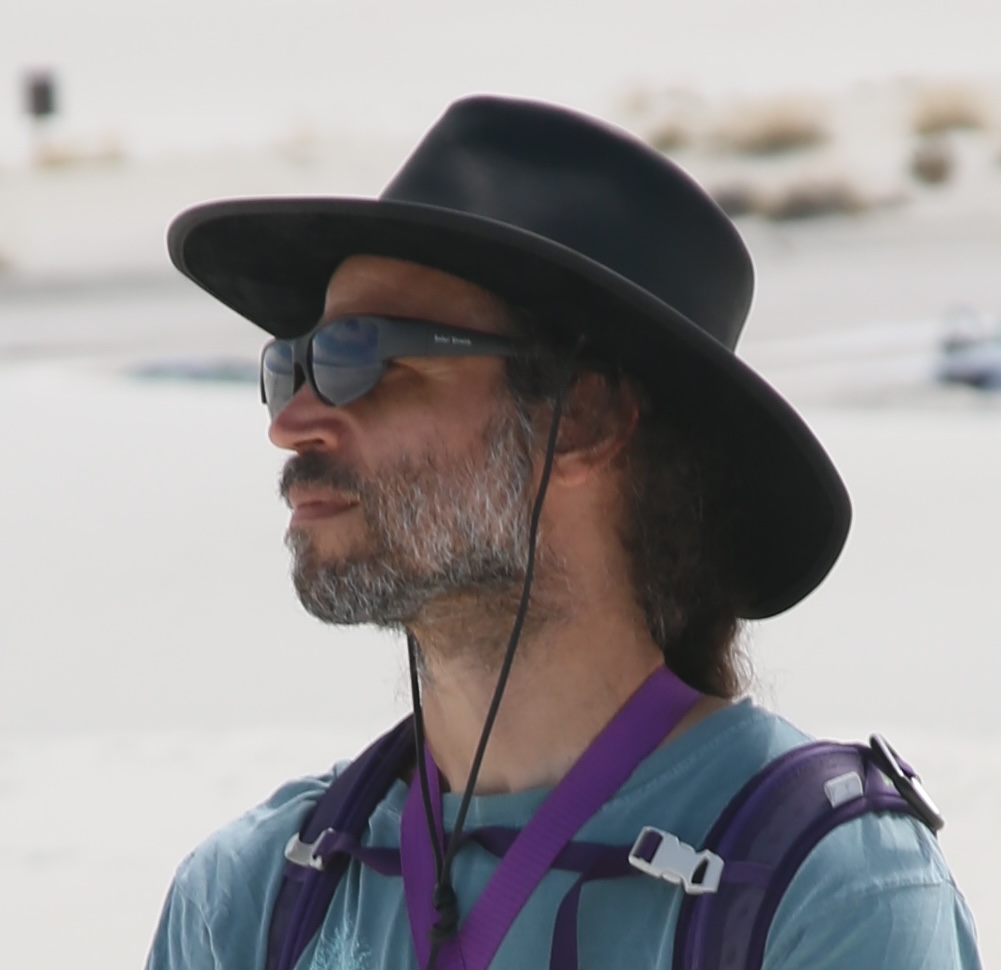
Gerald Micheal Guglielmo was born in Chicago and spent his youth in the northwestern suburbs of Chicago. After taking a break from college to join the Illinois Air National Guard, he went on to earn a B.S. from the University of Illinois and a Ph.D. in physics from the University of Minnesota. He went on to have a brief career in physics and a long career in software development, support, and management. Although always interested in creative expression, his interest in creative writing did not emerge until 2017. Since then, he has written short stories in various genres, including science fiction, fantasy, and the supernatural. He hopes to have a fiction story published in a local writers group anthology later this year, and he is actively working on the third book in a science fiction trilogy about a civilization where everyone lives nine lives. He currently resides in Geneva and still walks on the edge of curbs sometimes because he never really grew up.
About Us
The Republic of Letters serves Illinois Fox Valley area: including the communities of Saint Charles, Geneva, Batavia, Aurora, Wheaton, Elburn, and beyond.
Get In Touch
info@rolreadlocal.com
(630) 567-5410
©The Republic of Letters 2025