
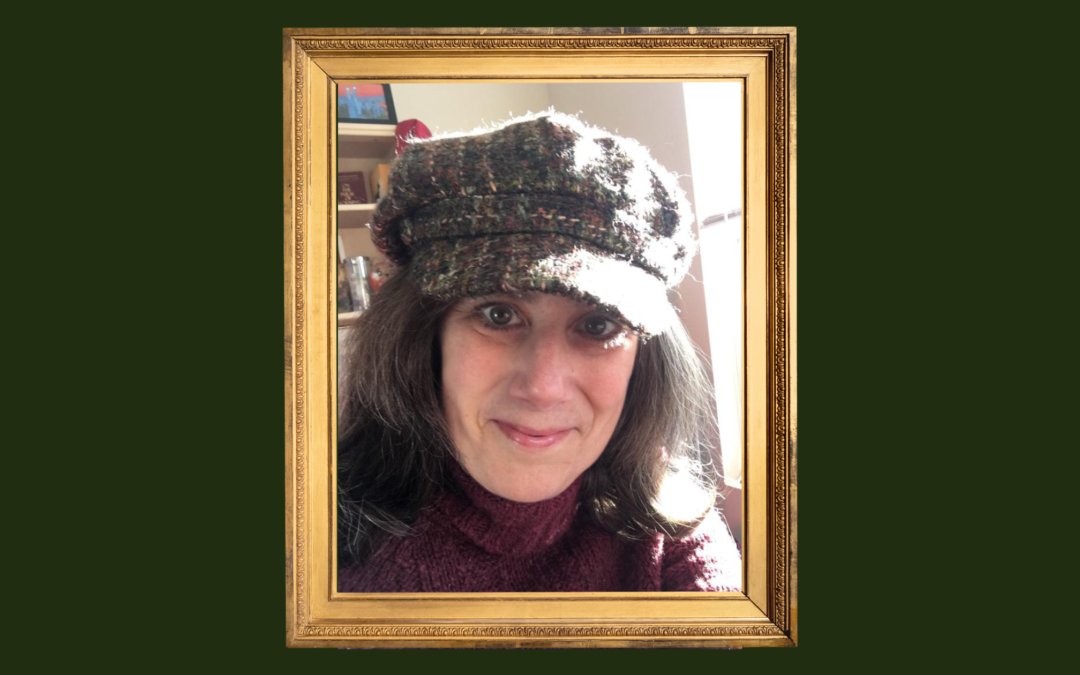
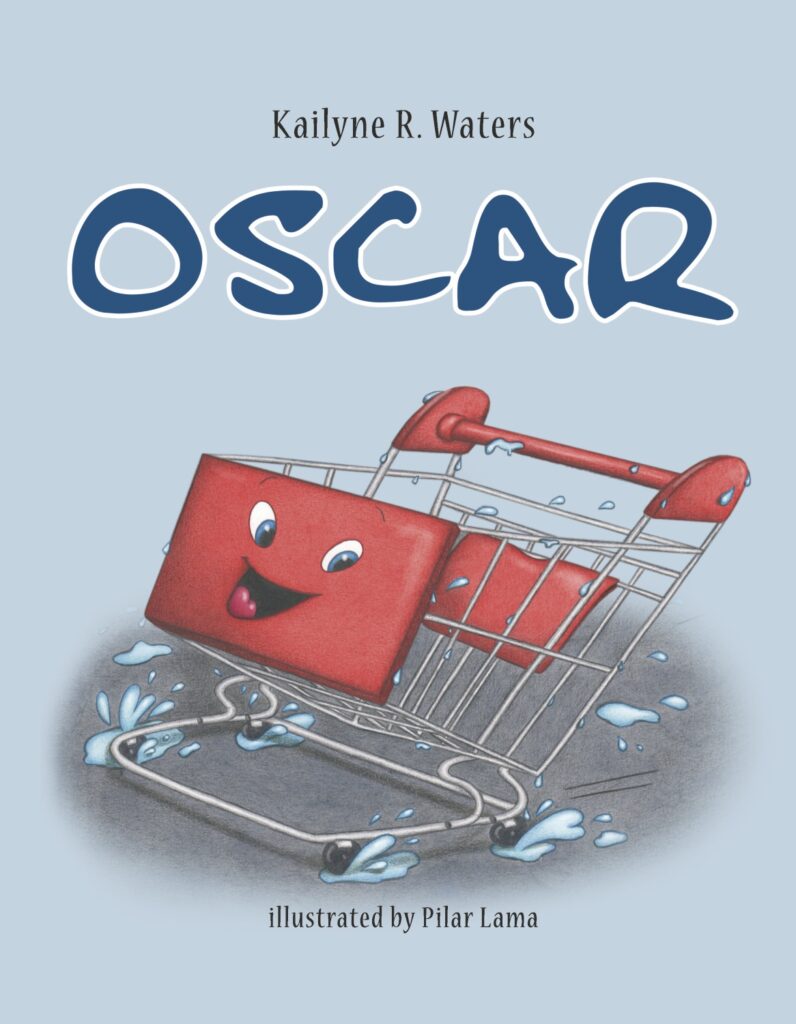
I first met Kailyne several years ago when she first walked into our bookstore on 1st Street in downtown Geneva. She had just completed her short film, The Go Cart, to tremendous success. Soon enough, Waters had been awarded a grant to turn The Go Cart into a book, and we were all gifted Oscar.
Not only is Kailyne an astute and thoughtful writer and artist, she’s also one of the nicest people you ever could meet. A giant supporter of all things local, you may recognize her face around town, or from the Batavia Art Markets where she shared Oscar with many of you.
Kailyne is one of our first members and we couldn’t be more grateful for both her support and her talent.

Interview
Name an author or a book that influences you and why.
A landscape that is forever changing, I hope – here are two: Living Buddha, Living Christ by Thich Nhat Hanh, Kara, and The Lonely Falcon by Joseph E Girzone. A current read is a children’s graphic novel series: Catwad, by A.J. Benton. I believe we are here to love and serve, with laughter.
Describe your writing process.
When I have space to create, I free flow write, that’s typically earlier in the day, and later then, I edit when needed. It really depends on the medium, though. At times, I have an outline and know the conclusion, but often, I’m led to points along a line and then clarity appears.
How did you discover that you were a writer?
I think it found me. This may not be an answer to the question, but it explains a lot. I was nineteen, working in my hometown mayor’s office, and assigned to assist his speech writer. The job involved picking her up, attending to her needs at the office, then dropping her home. Her name was Polly, she was retired, but the mayor insisted on her.
When I arrived, she exited her house wearing a cardigan and a pleated skirt that flared when she walked. She held a cigarette in a long holder and every word she annunciated with a pause. Polly told me stories of her time working with the mayor and her life in general.
At the office, I rolled out a typewriter and fetched her onion-skin paper. Polly then asked the mayor questions about the event he was to speak at, and she proceeded to jot down the answers on a notepad in shorthand. She spent no more than an hour composing a speech. At the conclusion of typing a page, she would dramatically pull it from the typewriter and hand it to me.
When she finished, I would give the speech to the mayor’s executive assistant, and she would bring it directly to his office. After a moment, he would exclaim through his closed door “You did it again, Polly!” or some similar sentiment.
Polly would nod and gesture for me to take her hand and guide her out of the office back to my car. On the way back, she seldom spoke. Instead, she would tilt her head out the window and stare up at the sky, smiling to herself.
It wasn’t until years later that I realized she had introduced me to her language of writing. She showed me how a writer prepares for her role and how she delivers on deadline. My admiration for the details of her allowed me to recognize the writer in me.
Describe your writing style in a phrase.
Inspired madness.
What are you working on now?
Myself and poetry. Poetry is not for the faint of heart or pen, but neither is self-repair come to think of it.
Describe your writing “desk.”
Whenever I have a moment, I will write, wherever I am. I do have two designated spots at home: a window looking out over a bird community, this is where I do most of my journaling; and my computer station to type up anything worth noting. Every other space in the house and beyond is where I write.
What was the inspiration behind your book?
The book was based on my animated children’s short film, The Go Cart. (Embedded below.) For eight years, I traveled to counties throughout northeast Ohio assisting people with disabilities and attempting to navigate the Medicaid process. Faced with mounting bills, they sought help to lessen the financial burden. Although I sometimes traveled one hundred miles a day in many directions, I often drove down one long stretch of road connecting three cities. It was along this road I would see the abandoned shopping carts. I thought about the patients I was visiting, and how they related stories of feeling isolated and neglected by a system charged with caring for them.
The cart, a metaphor for those who travel without a home, also embodies the idea of motion; of moving in a landscape in search of something more meaningful on a path less traveled. It also indicates the frailty of our lives; and how often we are set aside when we are no longer wanted or needed.
My thoughts soon turned to the visual of the cart – stationed quietly in neat rows in an entryway of a grocery store, near the back of a parking lot, flipped on its side, or abandoned on an empty street corner. What if one of them decided to take a chance and defy his fate?
I dedicated the film and its adapted book, Oscar, to all those who have felt forgotten, or who believed that their time for serving a purpose had passed. It is never too late to re-imagine. Regardless of the outcome or the stopping point, it is the process, the journey that best serves humanity.
Please recommend a local author you love and why.
Jen May. Her poetry is fierce.
Watch “The Go Cart”
About Us
The Republic of Letters serves Illinois Fox Valley area: including the communities of Saint Charles, Geneva, Batavia, Aurora, Wheaton, Elburn, and beyond.
Get In Touch
info@rolreadlocal.com
(630) 567-5410
©The Republic of Letters 2025